word of mouth
***
word of mouth ***
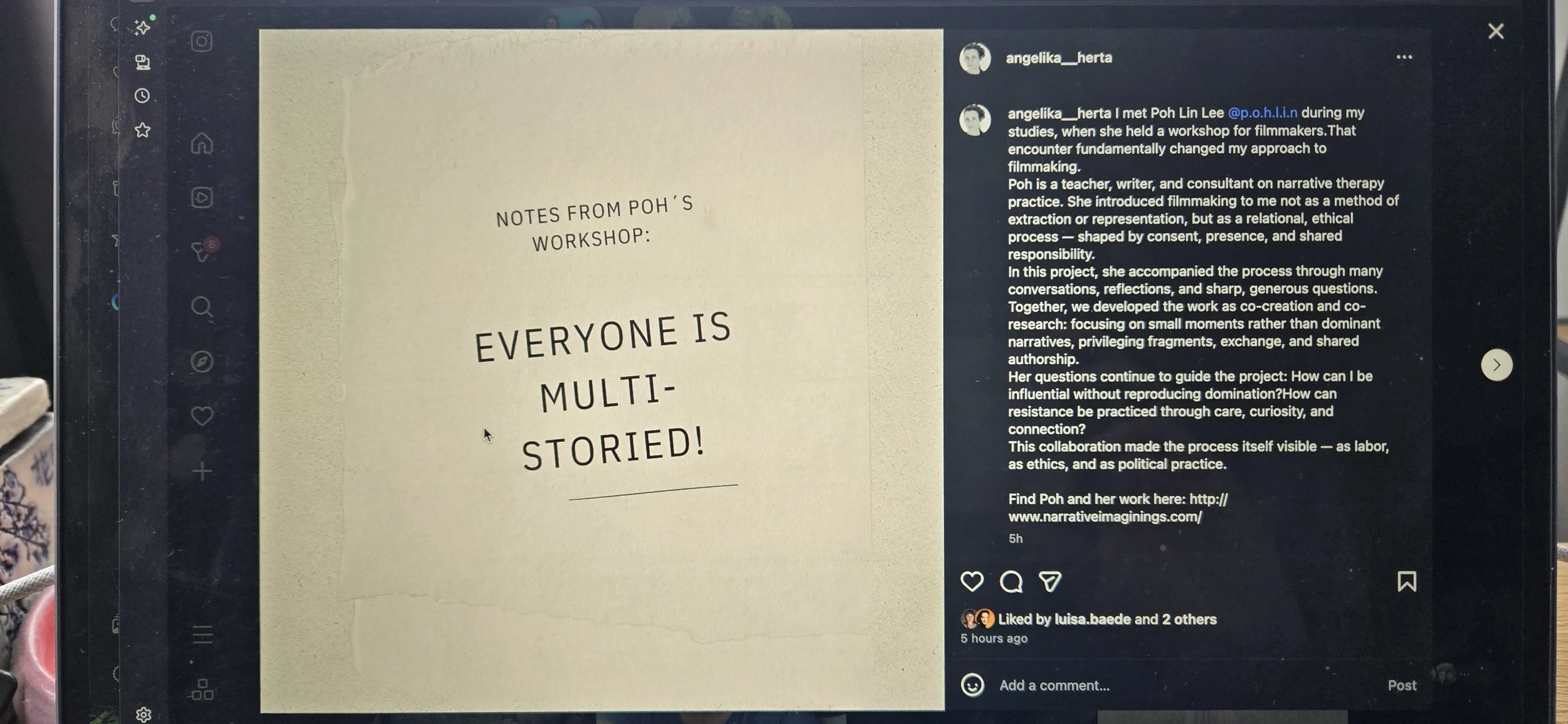
“…I met Poh Lin during my studies, when she held a workshop for filmmakers. That encounter fundamentally changed my approach to filmmaking…she introduced filmmaking to me not as a method of extraction of representation, but as a relational, ethical process - shared by consent, presence, and shared responsibility.
In this project, she accompanied the process through many conversations, reflections and sharp, generous questions. Together, we developed the work as co-creation and co-research: focusing on small moments rather than dominant narratives, privileging fragments, exchange, and shared authorship.
Her questions continue to guide the project: How can I be influential without reproducing domination? how can resistance be practiced through care, curiosity and connection? This collaboration made the process itself visible - as labour, as ethics, and as political practice…” Angelika Herta
“One thing I am thinking about as I write this is my time working with Poh Lin Lee. Poh is a writer, teacher, researcher, and narrative therapist who works with filmmakers to help us better understand our practice, our relationships, our bodies, and ourselves. I worked with her on and off for several months in 2022 and 2023, in two different group settings with other filmmakers, as well as individually. These encounters with Poh mark a turning point in my creative practice.
It was Poh who helped raise my awareness of my own needs and preferences as an artist and a woman, and of the invisible social pressures influencing my thoughts and actions—or more often, my inaction. I first met Poh in the aftermath of an international film festival that imploded spectacularly on itself. I'll spare you the details, but I was so shocked and traumatized by this event, I could not respond in any way other than mute helplessness.
Working with Poh helped me reclaim a sense of agency that I had lost along the way to becoming a professional filmmaker: a role which requires infinite patience, politeness, and political correctness. It wasn't until I began working with Poh that I realized that I had sacrificed so much of myself to the demands of working in an industrial filmmaking system: a brutal, ruthlessly competitive system that rewards artists who are willing to do or say anything to gain status and visibility, even if that means exploiting or disrespecting others, our environment, or ourselves in the process.
Poh taught me that I do not have to tolerate this. That I have the power to reimagine the conditions under which I practice my craft.”
read full article here


Film in Mind practitioner Poh Lin Lee and filmmaker Gabrielle Brady have just completed a 4 week consultation group on hybrid filmmaking and narrative therapy.
They curated this group according to four themes that they found significant in their own collaboration – (re)orientation, memory, response and translation. Within the generous and care-centered atmosphere that the participants established, Gabrielle and Poh Lin shared anecdotes, ideas and references that have nourished and inspired them in their cross-discipline process and offered creative prompts, narrative therapy inquiry and experiential exercises for the filmmakers to explore their projects.
One participant shared in the final session, “This whole experience was very poetic and artistic. When I signed up for this I loved the term narrative therapy and yet it’s been the opposite of anything clinical or analytical. Every time I came in here it reminded me that I’m an artist. It set a beautiful space to delve into some serious things.”
Another has also allowed us to share their feedback, “This workshop was a rare and necessary space. The weekly sessions over the month allowed a unique progression to explore our projects using truly liberating, non extractive practices. The warmth and integrity of both tutors enabled me to speculate and liberate both my perspective and relationship to how I make work.”
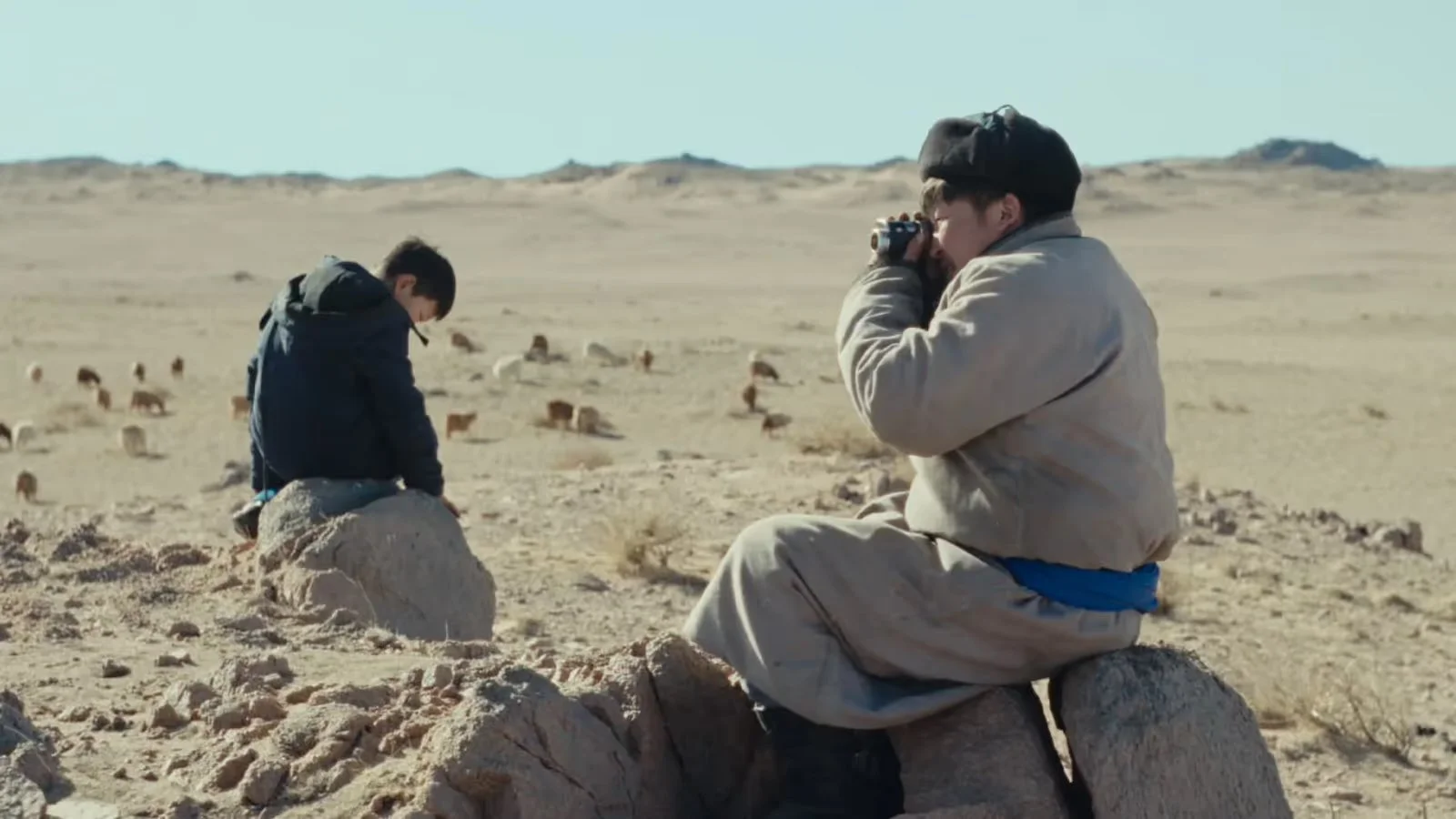
“Co-authorship is a form of filmmaking that decentralises the authorial voice of a director, allowing the subjects or collaborators to engage in the art of self-determination and blended authorship. What results is a form of filmmaking that leans into Island of the Hungry Ghosts co-author Poh Lin Lee's thesis of narrative therapy. While I'm not able to explain what narrative therapy is in practice, I can expand on my take on it as a viewer, in that the act of communally driven narrative storytelling allows for reflective and supportive ways of telling stories built on aspects of trauma, grief, and loss.”… (Andrew Peirce)
Read/ listen to the full article here:
Memory is so linked with Reputation
Was hat das Ansehen mit dem Gedächtnis zu tun? Und wie lässt sich aus zerstückelten Erinnerungsfragmenten eine Filmdramaturgie bauen? Kann man Parallelen zwischen der Arbeit am Film und dem therapeutischen Umgang mit einem Trauma ziehen? Narrative-Therapist Poh Lin Lee im Gespräch mit Regisseurin Alison Kuhn über ihren aktuellen Film „The Case You“.
What does reputation have to do with memory? And how can a film’s dramaturgy be built from dismembered memory fragments? Can one draw parallels between working on the film and dealing with trauma therapeutically? Narrative therapist Poh Lin Lee talks to director Alison Kuhn about her current film The Case You.